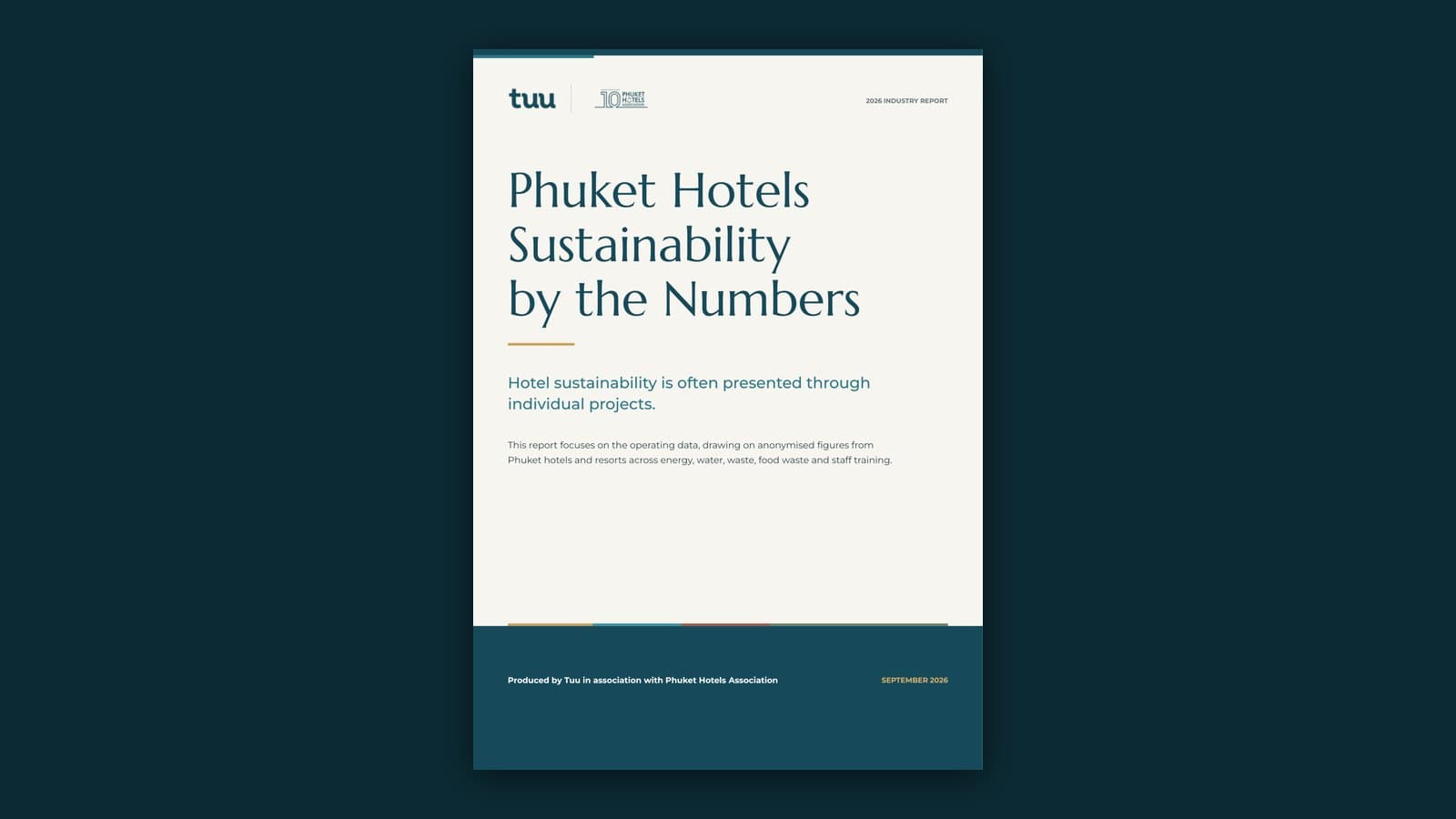
Phuket's hotels are getting better at controlling energy use and building sustainability into their daily operations. Changing where their power comes from, giving water a second use and finding reliable routes for separated waste is proving much harder.
Phuket Hotels: Sustainability by the Numbers examines anonymised operating data recorded by hotels and resorts during 2026. It covers seven indicators across energy, water, waste, food waste and staff training. No property is identified or ranked; the report looks at what the results reveal across the group.
The distinction matters in Phuket. Hotels can improve equipment settings, maintenance, purchasing and staff practices from within. Renewable power, water treatment and material recovery demand capital, physical infrastructure and dependable partners beyond the hotel.
The numbers at a glance
171 kWh/m²/year
Median energy intensity, against a reference level of 180.
3.3%
Median renewable-energy share. Almost 44% of properties recorded none.
More than half
The proportion of properties reporting no recycled or reused water.
92%
The proportion meeting or exceeding the reference level for staff training.
Where Phuket is moving—and where it is stuck
The report follows the evidence through energy, water, waste, food waste and staff training. It places the hotel results against Phuket's electricity mix, water pressures and waste infrastructure, before setting out five priorities for the industry.
About the analysis
The report is based on anonymised operating information recorded through the Tuu Performance Hub during 2026. Results are presented at group level, with no individual property identified or ranked. Medians are used so that unusually high or low results do not distort the comparison. Full calculations, reference levels and limitations are included in the report.
Produced by Tuu in association with Phuket Hotels Association.