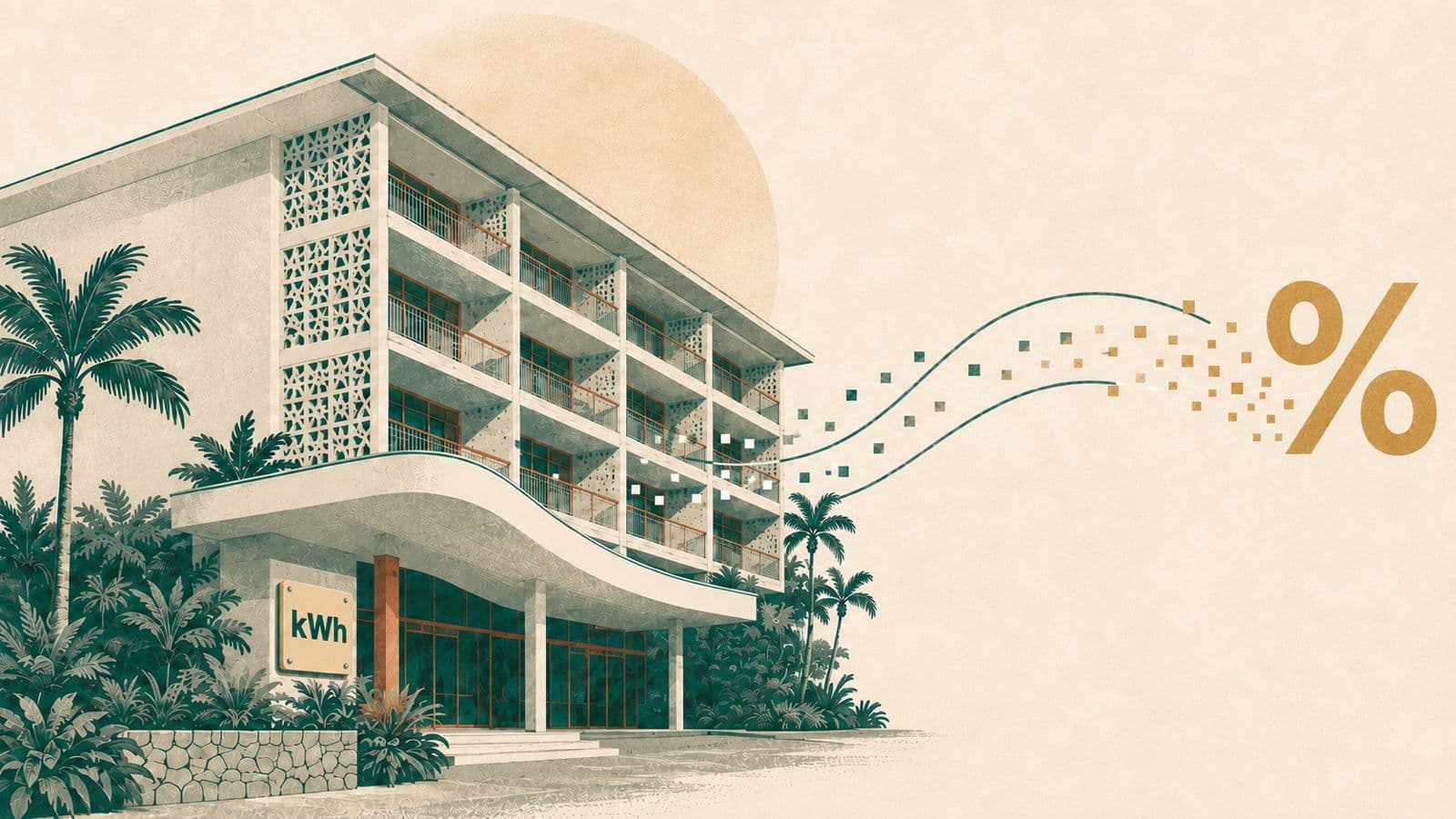
A hotel's utility bills may seem a long way from the terms of a billion-dollar corporate loan. Increasingly, they are not. When finance is linked to emissions, energy use or other targets, the figures used to assess performance may begin with records supplied by individual properties.
Recent financing by Asset World Corp (AWC) demonstrates the scale to which sustainable lending can expand in Thailand's hotel-linked property sector.
In July 2026, AWC announced two financing arrangements worth approximately USD 1.43 billion (THB 47.1 billion).
The larger was a THB 40.5 billion (approximately USD 1.23 billion) package with Siam Commercial Bank. It comprised a THB 10.5 billion (approximately USD 318 million) green loan for Woeng Nakornkasem Yaowaraj, a mixed-use development that will include InterContinental Bangkok Chinatown and Kimpton Bangkok Chinatown, and a THB 30 billion (approximately USD 909 million) sustainability-linked loan to support future AWC developments across Thailand.
Eight days later, AWC announced a further USD 200 million (approximately THB 6.6 billion) sustainability-linked loan from OCBC to support investment across its hospitality, commercial and lifestyle portfolio.
The announcements do not detail the performance indicators, targets or verification arrangements, which may instead be set out in the underlying loan documentation. It is therefore unclear whether either facility draws on data collected from individual properties.
An earlier AWC facility illustrates how this can work. Discussing CIMB Thai's THB 3 billion sustainability-linked loan to AWC, Jason Lee, then the bank's head of sustainability, said:
"This loan is directly tied to emissions reduction targets across their operations, with annual external assurance audits to verify their progress."
Lee said meeting the targets would reduce AWC's interest rate during the next loan-pricing cycle. Operational emissions performance was therefore subject to annual external assurance and connected to financing terms. Although the arrangement does not establish the terms of the newer loans, it demonstrates the principle: sustainability results can help determine financing costs.
Two structures, two different tests
A green loan is principally concerned with where the money goes. Under the Green Loan Principles, its proceeds must fund eligible environmental projects. For a hotel, these could include solar panels, efficient cooling equipment or wastewater systems. Supporting evidence might include invoices, technical specifications and measurements of subsequent savings.
A sustainability-linked loan asks a different question. Its proceeds can normally be used for general corporate purposes, but the terms vary depending on whether the borrower meets predetermined sustainability targets. The Sustainability-Linked Loan Principles call for measurable indicators, defined baselines, ambitious targets, regular reporting and external verification.
In simple terms, a green loan follows the money. A sustainability-linked loan is tied to the borrower's performance.
A green loan financing hotel equipment, therefore, requires records showing how the proceeds were allocated and, where feasible, the environmental impact achieved. A group-level sustainability-linked loan may require comparable figures from several properties if its targets depend on hotel operations.
The precise demands depend on what is measured. An emissions target could require electricity and fuel data to be reported within a common reporting boundary. An energy-intensity target also needs an agreed denominator, such as floor area or occupied rooms. Renovations, closures and other changes may require explanation. The loan may be agreed at corporate level, but its evidence chain can extend into individual hotels.
When property records become finance records
For GMs and sustainability leads, the practical issue is not mastering loan-market terminology. It is substantiating the part of a financial or environmental claim that depends on their property.
If a group target is based on energy intensity, a hotel may need to supply source invoices, confirm the reporting period and denominator, explain its treatment of renewable energy and account for material changes.
Utility invoices may sit with finance, meter readings with engineering and calculations with sustainability teams. Corporate offices must then consolidate the results.
The World Bank's April 2026 background note, Climate and Environmental Risks and Opportunities for the Thai Financial Sector, found that:
"Financial institutions face significant limitations in accessing standardized and reliable ESG data needed for climate risk assessment to expand the green lending portfolios."
— World Bank, Climate and Environmental Risks and Opportunities for the Thai Financial Sector (April 2026)
The report identifies inconsistent ESG data and assessment methods as constraints on climate-risk analysis and climate-linked lending. Across a hotel group, different reporting boundaries, source records or calculation methods can create the same problem. A polished sustainability report cannot resolve inconsistencies in the underlying property data.
Hotel teams should therefore be able to trace figures to original records, document how they were calculated, explain material changes and retain evidence of improvements funded through capital expenditure.
A green project does not make a green hotel
Green finance, building standards and hotel sustainability programmes assess different things.
Standard EDGE certification is principally an asset rating that assesses building features and modelled resource efficiency rather than measured operating performance. Green Hotel Plus considers wider operational matters, including management, procurement, resource use, waste and community engagement.
Thailand's voluntary sustainable-finance taxonomy clarifies the distinction. Its official business guide considers a hypothetical resort investing in solar panels, cooling improvements, electric-vehicle infrastructure and wastewater systems.
Qualifying investments may count as taxonomy-aligned capital expenditure, but they do not automatically make the hotel's room, restaurant, spa and event revenue taxonomy-aligned. The building's operation must pass a separate assessment for that wider revenue to qualify.
A hotel can therefore contain green investments without the entire business being classified as green. Financing a project, operating an efficient building and running a sustainable hotel are related, but they are not identical claims. Each requires its own evidence.
Traceable information also has uses beyond finance. It can support owner reporting, corporate targets, capital expenditure proposals, RFP responses and public claims. It can strengthen an investment case by establishing current consumption and showing whether promised savings were delivered.
The question is no longer simply whether a hotel can report an annual figure. It is whether the team can show where the figure came from, what period it covers, how it was calculated and what caused it to change.
As sustainability performance becomes more closely connected to investment, finance and commercial claims, the records behind it may require the same discipline as other financial information.
Where Tuu Verified fits
Tuu Verified addresses one part of this evidence chain: It turns existing hotel operational records into period-specific performance evidence, independently reviewed by HLB. It does not certify green finance, determine taxonomy alignment or replace the assurance required under a particular loan agreement. It gives property teams traceable figures for owner reporting, financing discussions and sustainability claims.